Advice October 12, 2026, 4 minute read
5 brake warning signs to fix before the first Michigan snow
Squealing, grinding, a soft pedal: what each brake symptom means, what it costs to ignore, and why we check brakes for free.
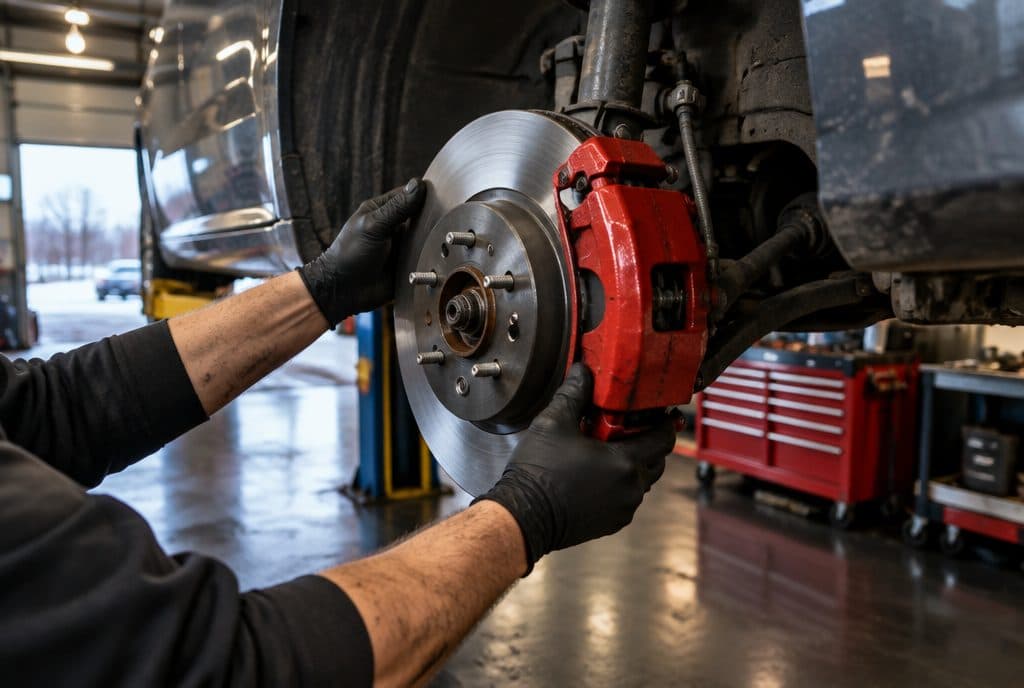
Stopping distance on wet or icy pavement can double. If your brakes are already borderline in October, December on Telegraph Road is not where you want to find out.
1. Squealing when you slow down
That high-pitched squeal is the wear indicator, a small metal tab designed to make noise when the pad is nearly gone. It's a warning, not an emergency. Get the pads measured this week.
2. Grinding
Grinding means the pad is gone and metal is on metal. Every mile adds cost, because the rotor is now being chewed up too. Stop driving and call the nearest shop; towing is free within 5 miles with repairs of $250 or more.
3. A soft or sinking pedal
A pedal that goes further than it used to, or slowly sinks at a stoplight, usually means air or moisture in the fluid, or a leak. This is the one symptom we treat as urgent.
4. Pulling to one side
If the car veers when you brake, one caliper is sticking or one side is worn more than the other. On a slick road, that pull becomes a spin.
5. Shaking at highway speed
A steering wheel that shudders when you brake from 60 mph is a warped rotor. It's safe for now but it gets worse, and it wears the new pads unevenly.
What a brake inspection costs at Redford Auto
Nothing. We pull the wheels, measure pads and rotors in millimeters, and show you the numbers. If you need work, you get a written price before we start, and we'll beat any other written quote.
- Pads usually last 30,000 to 60,000 miles
- Stop-and-go driving and winter salt shorten that
- Most pad-and-rotor jobs are done the same day